Homeowners and builders in Lake Tapps face specific energy efficiency standards that directly impact roofing and insulation decisions. The Washington State Energy Code establishes minimum requirements designed to reduce energy consumption and improve thermal performance in residential and commercial buildings throughout Pierce County and the broader Puget Sound region.
Understanding Washington State Energy Code Requirements
The 2023 Washington State Energy Code, which took effect on July 1, 2023, introduced stricter insulation standards for residential construction. Ceiling insulation requirements increased from R-49 to R-60, representing a significant upgrade aimed at improving energy retention in homes.
Wood frame wall R-values also increased from R-21 to R-20 plus R-5 continuous insulation or R-13 plus R-10 continuous insulation. These changes reflect Washington’s commitment to energy efficiency and align with updated International Energy Conservation Code standards.
Washington buildings fall primarily within Climate Zone 5 and Marine 4, with Lake Tapps located in the Marine 4C zone as part of Pierce County. This marine climate designation influences the specific insulation requirements and installation methods required for roofing systems. The code also mandates a maximum air leakage rate of 5 air changes per hour at 50 Pascals, emphasizing that proper air sealing works hand-in-hand with insulation to achieve optimal energy performance.
Roofing Insulation Standards for New Construction
New residential construction in Lake Tapps must meet the R-60 ceiling insulation requirement, which translates to a U-factor of 0.024. This applies to attic and roof assemblies where insulation is installed above the ceiling or within the roof cavity.
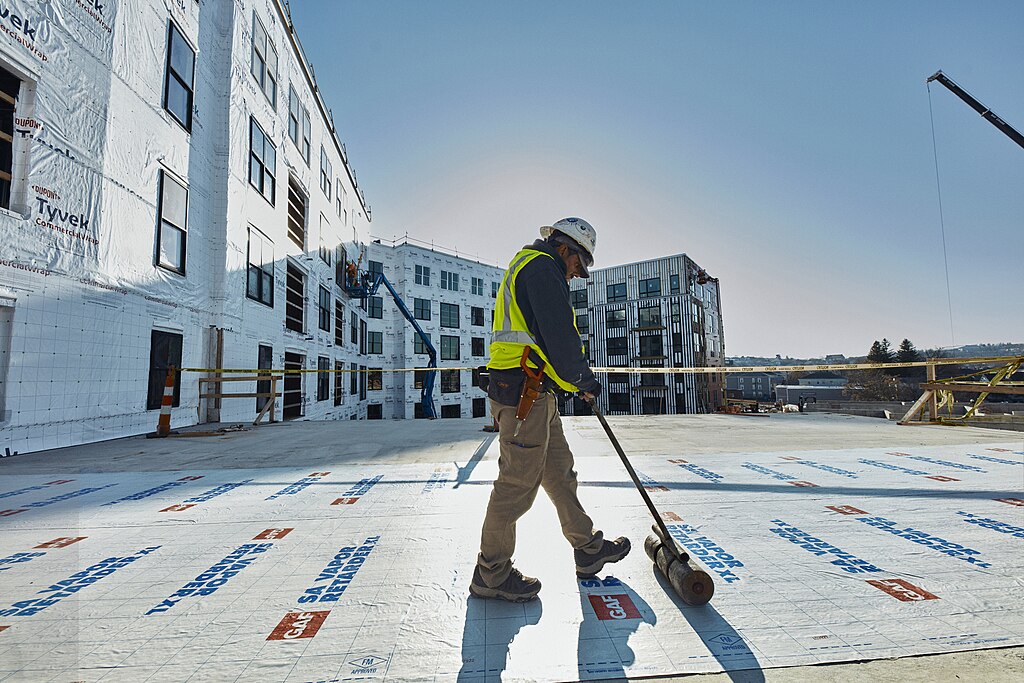
For commercial buildings, above-deck roof insulation must maintain a minimum thickness of 1 inch at its lowest point, including at gutter edges, roof drains, and scuppers. The type of insulation material affects how these requirements are met. Fiberglass batts, blown-in cellulose, spray foam, and rigid board insulation each have different R-values per inch of thickness.
Fiberglass batts typically provide R-3 to R-4 per inch, while spray foam can deliver R-6 to R-7 per inch depending on whether it’s open-cell or closed-cell formulation. Proper installation according to manufacturer specifications ensures that the insulation achieves its rated R-value and maintains uniform thermal resistance.
Insulation Requirements for Roofing Retrofits and Replacements
Energy code requirements for roofing projects depend on the scope of work and whether the roof cavity becomes exposed during construction. When replacing shingles or roofing materials without exposing the roof cavity, no additional insulation is required under exception provisions in the Washington State Energy Code. This allows straightforward roof replacements to proceed without triggering full insulation upgrades.
However, when the roof cavity becomes exposed during construction—such as when removing or replacing roof sheathing—more stringent requirements apply. The exposed cavity must be insulated to full depth with insulation providing a minimum R-3.0 per inch, or upgraded to meet current new construction standards.
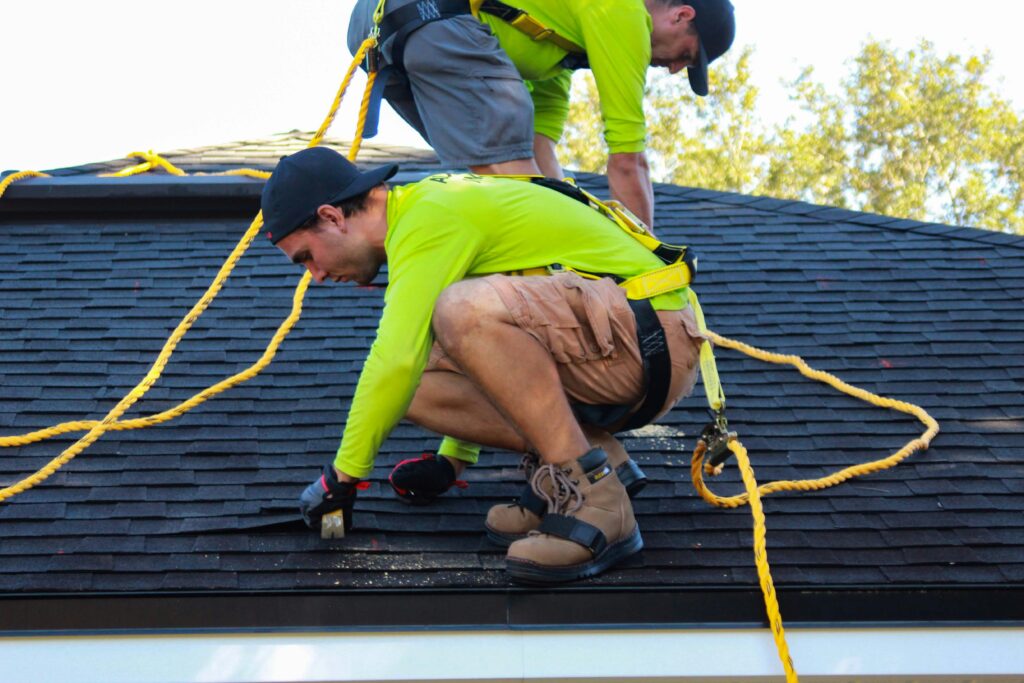
For vented roof assemblies, installers must maintain a gap between the insulation and the sheathing to allow proper air circulation, as required by building codes. Properties with no existing insulation in the roof cavity face the most comprehensive requirements when the sheathing or cavity becomes exposed.
In these cases, insulation must be provided either within the cavity or above the sheathing. Cavity insulation must fill the full depth of the space, while above-deck insulation must meet the same thickness requirements as new construction projects.
Ventilation and Moisture Management Considerations
Roof and ceiling assemblies in Lake Tapps require careful attention to ventilation and moisture control. When the ventilation space above insulation measures less than an average of 12 inches, a vapor retarder must be installed.
Faced batt insulation serving as a vapor retarder should be face-stapled to ensure proper performance. Single rafter or joist vaulted ceiling cavities need sufficient depth to allow a minimum one-inch vented air space above the insulation.
Air-impermeable insulation materials must either function as vapor retarders themselves or have a vapor retarder coating or covering in direct contact with the underside of the insulation. When all insulation is installed between the roof membrane and the structural roof deck, vapor retarders are not required.
These provisions reflect the marine climate conditions in the Lake Tapps area, where managing moisture and preventing condensation within roof assemblies is essential for long-term building performance.
Permit Requirements in Pierce County
Most roofing projects involving structural changes in Pierce County require building permits. This includes replacing roofs when altering or removing roof sheathing, modifying roof structures or load-bearing elements, and installing new roof systems on newly constructed buildings. Minor non-structural repairs and reroofing projects on slopes greater than 2 feet in 12 feet with materials weighing less than 7.5 pounds per square foot typically do not require permits.
The permit process involves determining specific requirements through the Pierce County Planning and Public Works Department, preparing project plans and material descriptions, submitting the application through the county permit portal, paying required fees, and scheduling inspections. Properties in critical areas such as flood zones, wetlands, or steep slopes may face additional restrictions or approval requirements before roofing work begins.
Professional Roofing and Insulation in Lake Tapps, WA
Navigating energy code requirements and insulation standards for roofing projects requires understanding both current regulations and proper installation techniques to ensure compliance and performance. Working with experienced professionals helps homeowners avoid common pitfalls related to ventilation gaps, vapor barriers, and R-value calculations that vary based on climate zone and building configuration.
Anytime Roofing Co works with Lake Tapps property owners to ensure roofing projects meet Washington State Energy Code requirements while improving energy efficiency and long-term durability.