OSHA fall protection standards give Lake Tapps roofers a clear framework for keeping crews safe any time they leave the ground. These rules shape how responsible contractors plan, equip, and supervise every roofing project in the area.
Why Fall Protection Matters on Lake Tapps Roofs
Roofing combines height, sloped surfaces, and unpredictable Pacific Northwest weather, so falls are one of the most serious risks on any Lake Tapps jobsite. Even a single misstep on wet shingles, loose granules, or cluttered decking can lead to a life‑changing injury if proper safeguards are not in place.
Beyond the legal requirements, fall protection is about workers getting home safely at the end of the day and preventing avoidable delays, claims, and project disruptions. For homeowners and property managers, working with roofers who treat fall protection as non‑negotiable helps reduce liability and shows that the contractor has solid systems behind the craftsmanship.
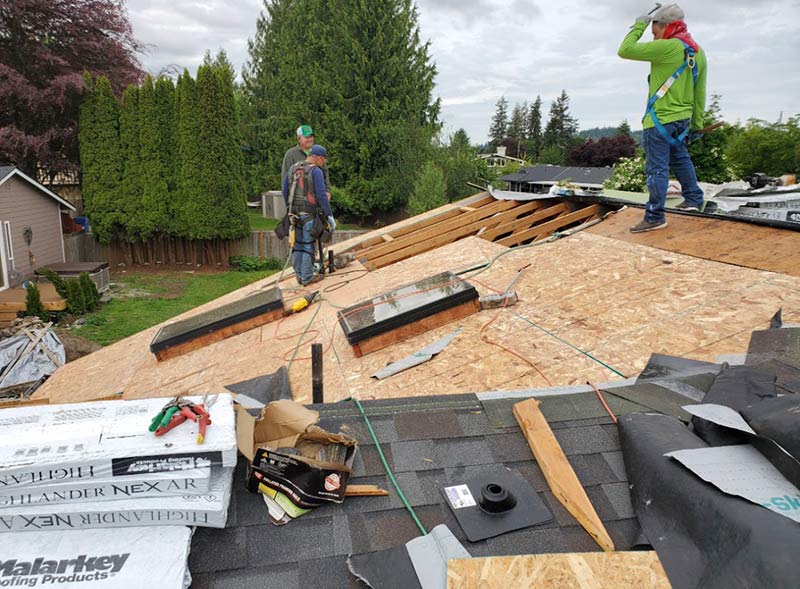
Visible safety practices—like harnesses, guardrails, or controlled access zones—are signs of a company that plans its work rather than improvising on the roof. In a community with a mix of lakefront homes, steep rooflines, and multi‑story structures, that level of planning matters.
OSHA’s Core Fall Protection Requirements
In construction, OSHA’s fall protection rules are set out in 29 CFR 1926 Subpart M, which covers most roofing work. The general duty is simple: whenever employees are exposed to a fall of 6 feet or more from an unprotected side or edge, the employer must provide fall protection.
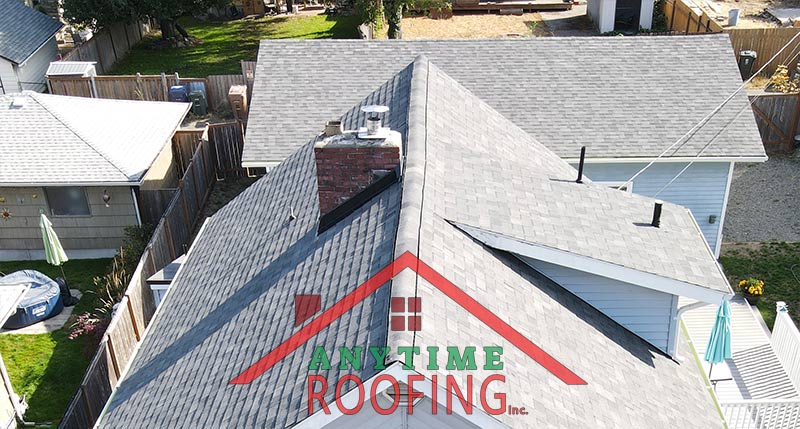
On steep roofs with slopes greater than 4 in 12, workers six feet or more above a lower level must be protected by guardrail systems with toeboards, safety nets, or personal fall arrest systems. Low‑slope roofs (4 in 12 or less) have similar protections, but OSHA allows certain combinations of guardrails, nets, personal fall arrest systems, or other compliant systems depending on roof width and how work areas are laid out.
In residential roofing, OSHA recognizes that some alternative methods can be used when specific conditions are met, such as limited roof slope and fall distance, though those alternatives still require careful planning and documentation. In every case, the employer—not the individual worker—is responsible for selecting appropriate systems, maintaining equipment, and enforcing safe practices.
To learn more about how OSHA defines its fall protection rules, you can review the official OSHA 29 CFR 1926 Subpart M fall protection standard.
Key Elements of a Compliant Roofing Fall Protection Plan
A strong fall protection plan for Lake Tapps roofers typically starts with the right system choices for each roof type. Guardrail systems work well around flat or low‑slope roof perimeters and roof openings because they provide a passive barrier that does not rely on workers clipping in and out.
Safety nets may be used when installing guardrails or personal fall arrest systems is impractical, especially on some larger commercial structures. For most residential and light commercial roofs in the Lake Tapps area, personal fall arrest systems (PFAS)—anchorage, harness, and connector—are a primary line of defense.
OSHA provides detailed criteria for PFAS, including anchorage strength, component compatibility, and the need to limit maximum arresting force and free‑fall distance. Roofers also need a practical rescue plan so a worker who has fallen and been arrested in the system can be brought down quickly and safely, rather than being left suspended.
Contractors can draw on practical examples of guardrails, warning lines, and personal fall arrest layouts in resources like the Western States Roofing Contractors Association article “Reducing Falls During Residential Construction: Re‑Roofing”, which walks through controls tailored to residential reroofing work. The eLCOSH OSHA Guide: Protecting Roofing Workers also highlights common hazards and solutions specific to roofing tasks. Housekeeping on the roof is another critical piece of compliance that is easy to overlook.
Keeping walking paths clear of loose shingles, tools, cords, and debris reduces trip hazards that can defeat even the best‑designed fall protection setup. Ladders and access points must also be secured and set up at safe angles, with handholds and landing areas that meet OSHA and state rules.
Washington State Rules Roofers Must Also Meet
Lake Tapps roofers must satisfy both OSHA and Washington State safety requirements, because Washington operates its own state safety program for workplaces. The Washington Administrative Code (WAC) 296‑880 lays out unified fall protection rules, including trigger heights, acceptable systems, and training expectations.
For many roofing tasks, the state rules effectively tighten the minimum fall height at which protection is required, emphasizing proactive controls over reactive measures. Recent updates in Washington have lowered fall protection thresholds for certain roofing activities, such as requiring protections at six feet on low‑pitch roofs where the previous trigger height had been higher.
State guidance also clarifies when a safety watch system can be used and under what limits, usually for temporary, infrequent tasks on low‑slope roofs. Roofers working around Lake Tapps must stay current on these changes so their safety practices, written programs, and on‑site supervision all align with the latest standards.
Owners and contractors can review the Unified Safety Standards for Fall Protection – WAC 296‑880 to understand the state‑specific details.
Training, Documentation, and Everyday Safety Culture
OSHA’s construction standards require employers to train workers to recognize fall hazards and understand how to use fall protection systems safely. That training should cover topics like inspecting harnesses and lanyards, choosing anchor points, setting up lifelines, using ladder systems correctly, and following site‑specific rules.
Refresher training is important after a near‑miss, equipment change, or regulatory update to make sure crews do not slip back into old habits. A written fall protection plan, updated for each project, helps keep supervisors and crews on the same page about what systems will be used, where anchors will be installed, and how work zones will be controlled.
Supervisors should routinely check that gear is in good condition and that workers are using it correctly rather than bypassing steps to save time.
Putting OSHA Fall Protection to Work in Lake Tapps, WA
When Lake Tapps roofers take OSHA and Washington fall protection standards seriously, they not only reduce risk on the job but also bring greater stability and confidence to every roofing project they touch. These safety‑driven practices as a roofing contractor rely on OSHA‑compliant planning, equipment, and training on local roofs; if you are considering roofing work in the Lake Tapps area, you can learn more about this approach and available services on the company’s website.
If you have questions about safe, code‑compliant roofing work, reach out to Anytime Roofing, Inc. today through the contact page.