Lake Tapps is one of Pierce County’s most distinctive communities — a former hydroelectric reservoir turned residential lake. When Puget Sound Energy decommissioned the dam system that once defined the area, the question of reliable municipal water for tens of thousands of residents became urgent. The answer was the Cascade Water Alliance (CWA), a regional public agency that now anchors water delivery for communities across the eastern Pierce and King County corridor.
What Is the Cascade Water Alliance?
The Cascade Water Alliance is a public agency formed in 2001 under Washington State’s Interlocal Cooperation Act — a law that allows local governments to pool resources for services too complex or costly for any single jurisdiction to manage alone. Member utilities include Covington Water District, Lakehaven Utility District, and others serving communities from Bonney Lake to Auburn.
Unlike a traditional utility, the CWA does not treat water itself. Instead, it purchases treated water wholesale from Seattle Public Utilities and King County Water District No. 111, then moves it through high-capacity transmission mains to member agency distribution networks. This regional model allows smaller utilities to access a large, reliable source without independently maintaining treatment infrastructure.
How Water Reaches Lake Tapps Residents
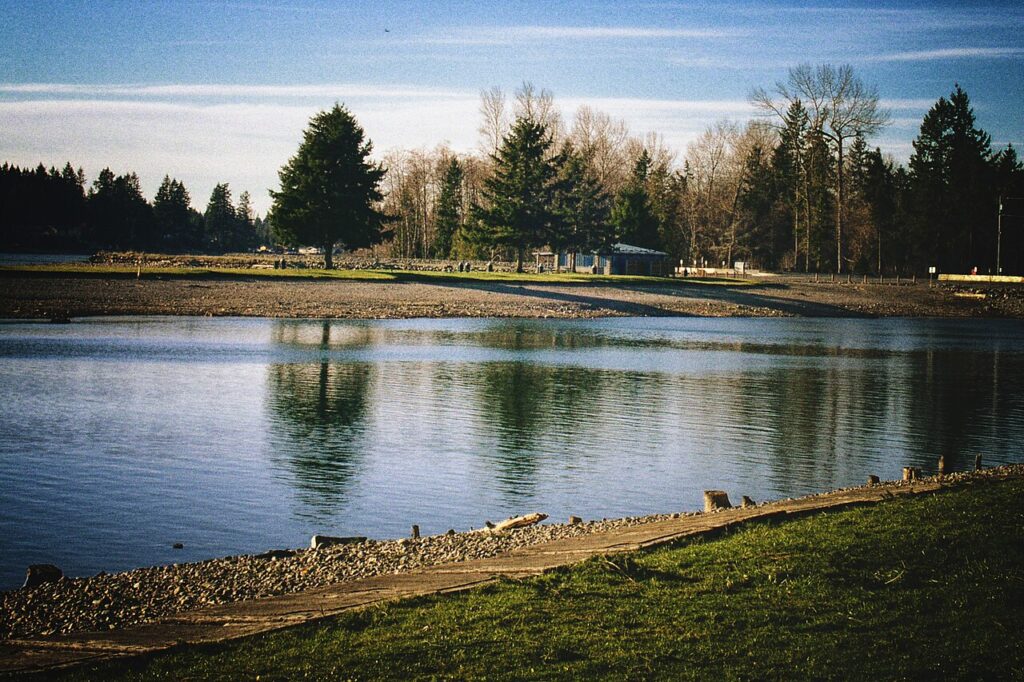
Water serving the Lake Tapps area begins at the Cedar River Watershed — a protected municipal watershed covering roughly 90,000 acres east of Seattle. Seattle Public Utilities treats the source water and delivers it in bulk to the CWA transmission network, after which member utilities such as Bonney Lake and Pierce County Utilities manage local distribution.
The Lake Tapps area’s varied topography makes pressure management central to reliable delivery. Booster pump stations, pressure reducing valves (PRVs — devices that step down line pressure to safe residential levels), and elevated storage reservoirs keep water flowing consistently across the community’s hillsides and waterfront elevations. All public water systems in Washington State operate under WAC 246-290, the state regulatory framework governing system design, water quality monitoring, and infrastructure maintenance.
Why This Matters for Local Property Owners
Reliable water infrastructure has practical implications well beyond the tap. Pierce County’s climate brings wet winters, dry summers, and annual precipitation that can exceed 50 inches in the foothill areas near Lake Tapps. That moisture cycle affects both water supply reliability and the long-term durability of residential structures.
Homes connected to the CWA-supplied network benefit from a continuously maintained delivery system engineered for regional demand. The same precipitation that feeds the Cedar River Watershed, however, creates ongoing structural challenges for area properties. Sustained moisture exposure, freeze-thaw cycling in late fall and early spring, and moss accumulation driven by Pacific Northwest humidity place elevated stress on roofing systems relative to drier inland climates — a maintenance factor that compounds over time for Lake Tapps homeowners.
Water Quality Standards and Monitoring
The CWA and its member utilities operate under both federal and state frameworks. The U.S. Environmental Protection Agency’s Safe Drinking Water Act establishes national maximum contaminant levels (MCLs) — legally enforceable concentration limits — for more than 90 pollutants, and Washington State frequently applies standards more stringent than the federal baseline.
Locally, utilities serving Lake Tapps publish annual Consumer Confidence Reports (CCRs), which disclose test results for regulated contaminants including disinfection byproducts, lead, copper, and microbial indicators. Property owners with older plumbing should note that while treated water quality is tightly regulated at the system level, interior conditions — such as aging fixtures or lead solder in pre-1986 construction — can affect water quality at the point of use.
Growth, Infrastructure, and Long-Term Planning
The Lake Tapps area has seen substantial residential growth over the past two decades, driven by its lakefront character and relative affordability compared to neighboring King County communities. Pierce County’s Comprehensive Plan designates significant portions of the area as Urban Growth Areas (UGAs) — zones designated under Washington’s Growth Management Act to concentrate new development near existing infrastructure — signaling continued expansion for years ahead.
This growth puts pressure on water, sewer, and stormwater systems alike, and the CWA has addressed this through phased transmission capacity expansions. For property owners, an expanding built environment and aging housing stock together make long-term structural maintenance increasingly important. A home’s exterior envelope — including roofing and drainage systems — plays a direct role in managing the region’s persistent seasonal moisture, a factor that grows in significance as neighborhoods develop and property values rise.