Your roof is your home’s first line of defense against the Pacific Northwest’s relentless rain, wind, and occasional snow — and a roof built to code is what separates a lasting investment from a costly liability. The International Residential Code (IRC), developed by the International Code Council (ICC) and adopted with amendments by Washington State, sets the minimum standards for structural framing, material installation, ventilation, and weather resistance.
In Pierce County and the greater Lake Tapps area, these standards carry legal weight — and your roofing contractor must follow them.
What the IRC Actually Governs in Residential Roofing
The IRC’s roofing provisions span several chapters, with Chapter 9 (Roof Assemblies) and Chapter 8 (Roof-Ceiling Construction) forming the core framework — covering both the structural elements that carry your roof and the weather-resistant systems that protect your interior.
IRC Section R905 sets the installation requirements for the most common roofing materials: asphalt shingles, wood shakes, metal panels, and underlayment systems. These aren’t vague recommendations — each standard specifies fastener counts, overlap dimensions, deck preparation, and flashing details that directly affect how your roof performs over decades.
Washington State adopts the IRC with amendments through the Washington State Building Code Council. Local jurisdictions like Pierce County may impose additional requirements, so working with a contractor who knows both the state code and local enforcement standards matters more than many homeowners realize.
Key IRC Standards That Protect Lake Tapps Homes
The Pacific Northwest’s climate demands roofing systems engineered for moisture, not just aesthetics. Several IRC provisions directly address the conditions Lake Tapps homeowners face year-round.
Underlayment and Weatherproofing
IRC Section R905.1.1 requires an underlayment — a water-resistant layer installed between the roof deck and the finish material — on virtually all sloped roofs. In high-precipitation regions like western Washington, a self-adhering polymer-modified bitumen underlayment (commonly called “ice and water shield”) is often required at eaves and valleys, where water infiltration risk is highest.
This isn’t an upsell — it’s a structural safeguard. The Washington State Energy Code also intersects here, requiring adequate attic insulation and vapor management that work in tandem with proper underlayment to prevent condensation damage from within.
Roof Ventilation Requirements
IRC Section R806 mandates a net free ventilated area ratio of not less than 1/150 of the attic floor area — or 1/300 when a vapor retarder is installed. Balanced ventilation (intake at soffits, exhaust at the ridge) prevents the heat and moisture buildup that accelerates shingle deterioration and structural rot in Washington’s wet climate.
Poor ventilation is one of the leading causes of premature roof failure. A contractor who skips or underspecifies attic ventilation during a replacement may be saving time at installation — and costing you thousands in callbacks within five years.
Structural Roof Framing
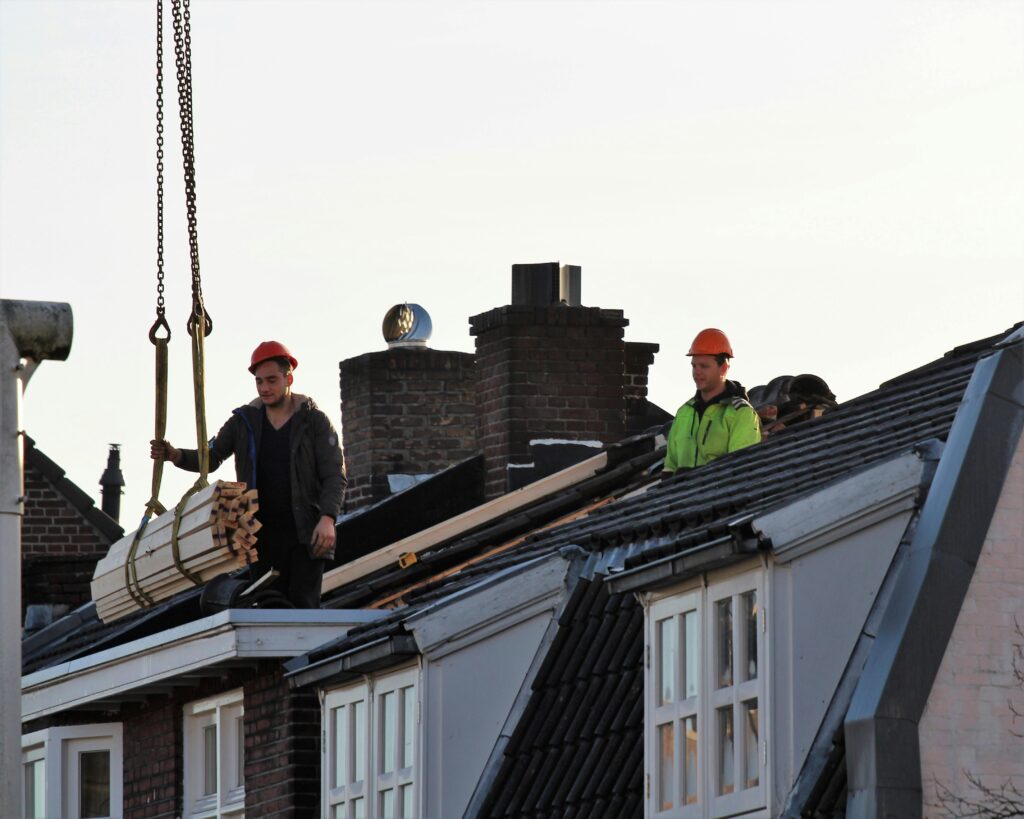
Chapter 8 of the IRC governs roof framing — the rafters, ridge beams, collar ties, and ceiling joists that give your roof its shape and load capacity. In western Washington, design loads include not just dead load (the weight of roofing materials) but live load (snow accumulation) and wind uplift, which is particularly relevant for homes near open water like Lake Tapps.
IRC Table R802.4.1 provides span tables for common rafter sizes, but local snow and wind load requirements often tighten those specifications — a detail that matters for every home near the open water of Lake Tapps.
Permitting and Inspection: What to Expect in Pierce County
Most roof replacements in Pierce County require a building permit, particularly when structural work is involved or when changing the roof covering type. The permit process ensures a licensed inspector verifies IRC compliance at key stages — not just at final completion.
A reputable contractor handles permitting as a standard part of the job, not an optional add-on. According to Pierce County’s building permit requirements, unpermitted roofing work can complicate home sales, void manufacturer warranties, and expose homeowners to liability if the work fails and triggers insurance claims.
The inspection process typically covers three areas: the deck condition before new material is applied, the underlayment installation, and the final shingle or panel installation. Each stage protects you — not just the building department.
How Code Compliance Affects Your Roof’s Lifespan and Insurance
Insurance carriers increasingly scrutinize roofing work at renewal. A roof installed without permits or outside IRC standards can result in denied claims after storm or wind damage — precisely when you need coverage most. Some carriers now require inspection documentation before extending coverage on roofs more than 15 years old.
Manufacturer warranties tell a similar story. Most architectural shingle warranties — many rated for 30 to 50 years — are voided by installation errors that violate the manufacturer’s specifications, which are themselves written to align with IRC minimums. Getting a roof right the first time isn’t perfectionism; it’s basic protection.
The NRCA notes that roofing failures are most commonly traced to installation defects, not material defects. Code-compliant installation reduces that risk substantially — and gives you a documented record should a dispute arise.
Work with a Code-Savvy Roofing Contractor in Lake Tapps, WA
Understanding the IRC gives you the vocabulary to ask better questions and the framework to evaluate contractor bids with confidence. At Anytime Roofing, Inc., we serve Lake Tapps and the surrounding Pierce County communities with full IRC-compliant roof repairs, replacements, and inspections — every project permitted where required and installed to code.
Whether you’re navigating storm damage, planning a long-overdue replacement, or simply want a professional assessment of your current roof’s condition, we bring the local knowledge and technical expertise your home deserves.
Ready to move forward? Contact us today to schedule your inspection or get a no-obligation estimate — and get your roof done right the first time.