
Origins: The Four Lakes and the White River Project
The story of Lake Tapps begins in the early 1900s with several smaller, glacially influenced lakes nestled in southeast Pierce County: Church Lake, Crawford Lake, Lake Kirtley, and what was already called Lake Tapps. These separate water bodies occupied low-lying basins that were fed largely by natural springs, surface runoff, and local drainage.
In 1909, a major engineering effort began under the auspices of Stone & Webster for Pacific Coast Power Company (later PSE). That project, often called the White River Project, sought to generate hydroelectric power by diverting water from the White River through a network of flumes, canals, dikes, and embankments.

Between 1910 and 1911, about 14 to 15 earthen dikes and embankments were built, raising water levels by approximately 35 feet and merging the four lakes into one coherent reservoir. A diversion dam on the White River near Buckley fed water through a flume and canal system into the southeastern basin, and an outlet channel and powerhouse on the western side allowed water to rejoin the White River downstream after producing electricity.
At full capacity, the reservoir covered about 2,700 acres with a complex shoreline spanning more than 45 miles of coves, peninsulas, and islands. The Dieringer Powerhouse and associated headgates, pipes, and turbines enabled the generation of hydroelectric energy, supplying power to Tacoma, Seattle, and surrounding areas.
Contested Use, Regulation, and Ecology in the 20th Century
Through the 20th century, Lake Tapps was managed primarily as a hydroelectric reservoir. Its water levels were subject to significant drawdowns in winter to maintain flood control, enable maintenance, and maximize power generation.
Because of these fluctuations and the glacial silt from the White River, light penetration into the lake was limited, suppressing aquatic plant growth. The 1997 fish survey described Lake Tapps as having mean depth around 7.6 m and maximum depth of about 27.4 m, noting that habitat for aquatic vegetation was sparse.
In the late 1990s and early 2000s, regulatory pressures and concerns about fish habitat—especially for Chinook salmon—led to scrutiny of the project’s environmental impacts. Large stakeholder coalitions emerged, including local governments, homeowner groups, tribes (Puyallup and Muckleshoot), regulatory agencies, and Puget Sound Energy itself.
In January 2004, PSE officially ceased hydroelectric operations at Lake Tapps. After that, the Washington State Department of Ecology took over dam safety and regulatory oversight from the Federal Energy Regulatory Commission.
Transition to Municipal Water Resource and Recreation
In December 2009, the Cascade Water Alliance — a consortium of cities and water districts in King and Pierce counties — purchased the Lake Tapps reservoir project from PSE with the aim of future municipal water supply. Under this new mission, reservoir management priorities changed: the lake is kept more consistently full in summer to support recreation, while winter drawdowns are more moderate and subject to ecological constraints such as maintaining instream flow in the White River.
Various repair and infrastructure projects have been undertaken, such as refurbishing the powerhouse discharge tubes and headgate structure during drawdown periods. The U.S. Army Corps of Engineers also replaced the diversion structure and fish trap on the White River beginning around 2018, improving fish passage and safety for decades ahead.
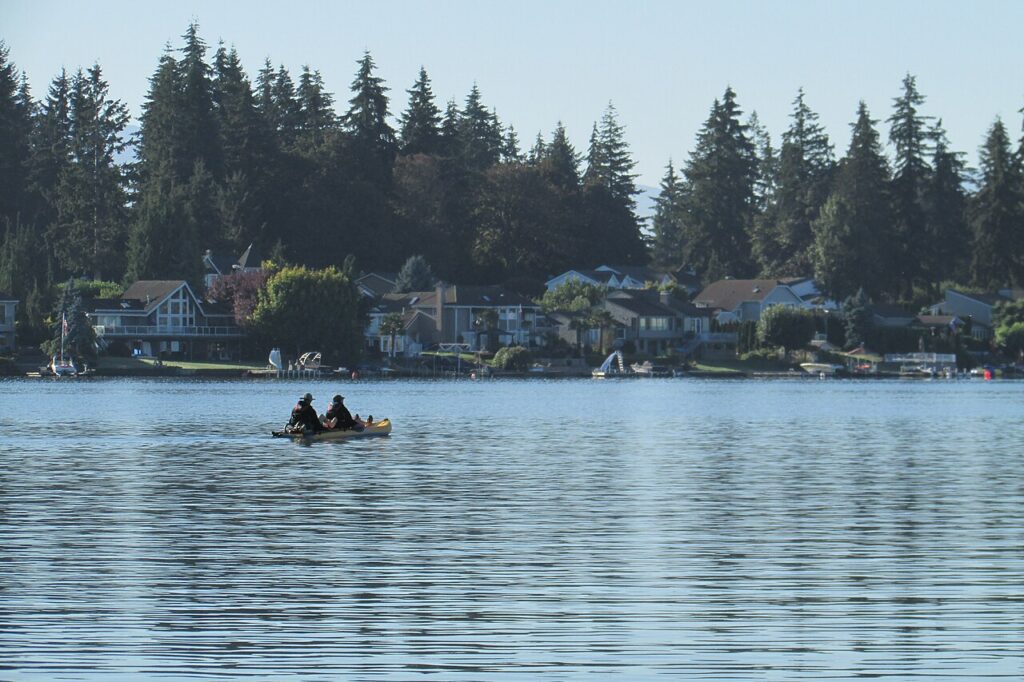
Today, Lake Tapps is used heavily for boating, fishing, water skiing, and lakeside residential living. Homeowners along the shoreline have helped shape agreements that guarantee summer recreational water levels, maintaining continuity between water supply and community goals.
Recent Challenges and the Road Ahead
Looking ahead, Lake Tapps faces several ongoing challenges: balancing water supply and environmental obligations, adapting to climate change, managing invasive species and algae, and maintaining aging infrastructure. The ownership and leasing arrangements with municipalities include long-term commitments to keep summer levels favorable for recreation, but planners must continuously review assumptions against changing hydrology and population growth.
From its beginnings as a hydroelectric reservoir to its modern role as a multi-purpose water and recreation resource, Lake Tapps has evolved through engineering, environmental, and community layers. Its story is one of adaptation and compromise among competing interests—energy, ecology, recreation, tribes, and urban demand.