Washington treats roofing as a high‑risk trade, so the Department of Labor & Industries (L&I) sets detailed safety rules to prevent falls and serious injuries on job sites across the state. These rules directly affect how a roofing contractor in Lake Tapps plans, supervises, and completes work on your home or commercial property.
When you understand the basics of these roofing safety programs, you can better evaluate which contractor truly prioritizes compliance and long‑term roof performance. This knowledge also helps you ask smarter questions before anyone sets foot on your roof.
How Washington L&I Regulates Roofing Safety
L&I enforces the Washington Administrative Code (WAC), which lays out specific fall protection and construction safety standards for roofing work. Roofing companies must follow these rules on every job, from small shingle repairs to full commercial roof replacements.
The state’s unified fall protection rule, Chapter 296‑880 WAC, requires employers to provide and implement systems like guardrails, fall arrest harnesses, or warning line systems when workers face fall hazards. L&I’s fall protection basics guide provides a clear overview for employers and crews, explaining how these requirements apply on real job sites.
These standards are aligned with federal OSHA requirements but tailored to Washington worksites, which is important in steep‑slope and low‑slope roofing conditions common around Lake Tapps. L&I also issues citations and substantial fines when contractors ignore these safety obligations.
Recent state news highlighted roofing companies facing more than $750,000 in combined fines for repeated fall protection violations, including unsafe work on a home in Lake Tapps. That enforcement history is a clear signal that safety is not optional paperwork; it is a core part of how reputable roofers operate.
Key Roofing Fall Protection Rules That Protect Your Property
Homeowners and property managers can assess a roofer’s compliance by understanding a few basic fall protection principles. Washington’s fall protection rule requires protection any time workers are exposed to a fall of four feet or more on most construction activities, including roof work.
On low‑slope roofs (slopes up to 4:12), employers must use systems such as personal fall arrest, fall restraint, warning lines, or guardrails when workers are near unprotected roof edges. For steep‑slope roofs (greater than 4:12), the rules tighten further, typically requiring full fall arrest or equivalent protection, because a slip can quickly turn into a severe fall.
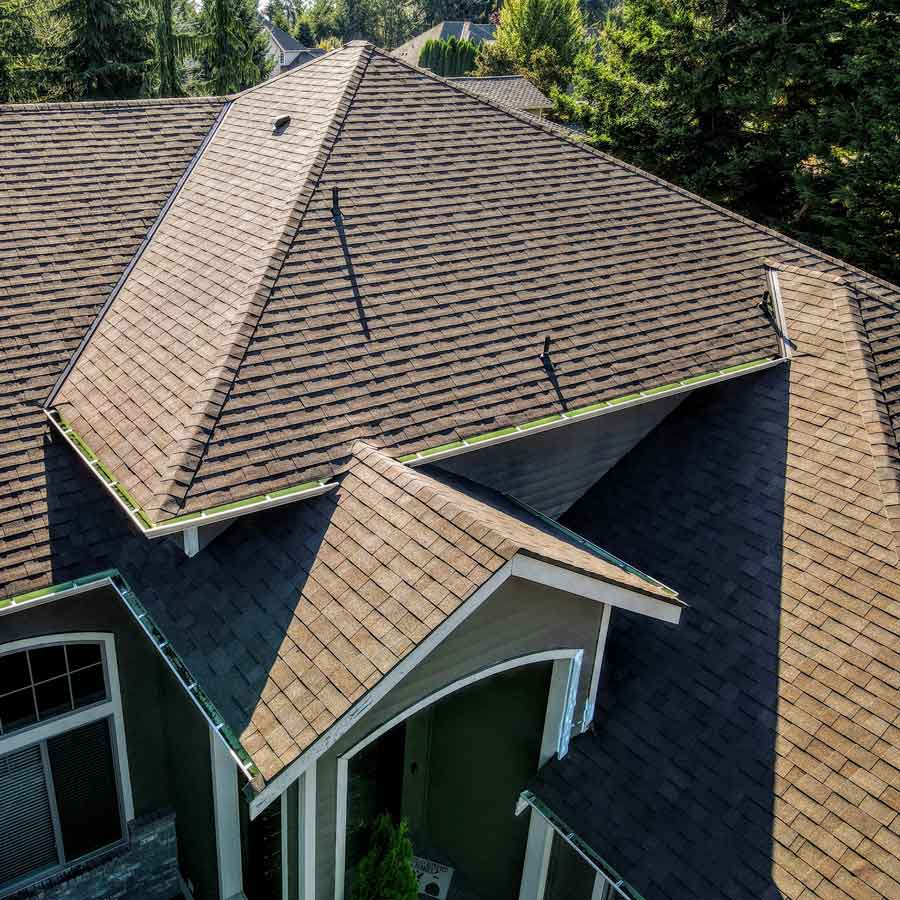
These definitions matter on many Lake Tapps homes, where complex rooflines and pitches increase risk. Washington also allows a safety monitor paired with a warning line as a method of fall protection during roofing work on some low-pitched roofs, but only when it is clearly detailed in a written plan for fall protection.
L&I even publishes a fall protection plan template that employers can use to document hazards, chosen systems, and rescue procedures, giving you a concrete reference for what a proper plan should include.

Why Roofing Safety Compliance Matters for Lake Tapps Owners
L&I’s roofing safety requirements not only safeguard workers but also shield homeowners and commercial property owners from unnecessary liability and subpar workmanship. A crew that cuts corners on fall protection is more likely to rush, damage your roof deck, or overlook critical flashing and waterproofing details.
According to L&I, falls from heights remain one of the leading causes of workplace deaths and serious injuries in Washington construction. The agency’s falls from heights page highlights how often these incidents occur and outlines practical prevention strategies for employers and workers across the state.
When a roofer disregards safety rules and an accident occurs on your property, you may face project delays, insurance complications, and significant stress that could have been avoided. Choosing a contractor who clearly follows Washington L&I programs greatly reduces that risk.
In addition, safety‑conscious roofing contractors tend to run more organized projects overall. They maintain current licensing and registration with L&I, carry proper workers’ compensation coverage, and keep up with code changes that affect things like roof ventilation, underlayment requirements, and structural load capacity governed by the International Building Code.
An analysis from Archbright on fall protection rule updates shows how closely state standards now align with federal OSHA expectations, reinforcing the importance of contractors staying up to date.
What Anytime Roofing’s Approach to Safety Means for Your Roof
Anytime Roofing, Inc. proudly provides Lake Tapps, WA, and the broader South Puget Sound region with dependable roofing services for both residential and commercial properties. From detailed roof inspections that catch issues early to shingle replacements and flat roof repairs, the company structures its services around long‑term durability rather than quick fixes.
Because roofing is a high‑risk trade under Washington law, reputable contractors build every project around L&I’s safety standards, not just production timelines. That includes using appropriate fall protection systems based on roof pitch, documenting safety procedures in a fall protection plan, and ensuring crews receive regular training on Washington’s updated rules.
For Lake Tapps homeowners, this focus on compliance translates into cleaner job sites, less disruption around your property, and higher confidence that crews can work safely even on complex or elevated roof sections. Anytime Roofing’s work across Lake Tapps and South Puget Sound also means the team routinely navigates local permitting requirements and inspection expectations for roof replacements and structural work.
If you want to see an independent snapshot of their local presence, the Anytime Roofing BBB profile lists their Lake Tapps address, service area, and business details. Understanding how safety rules align with local building codes helps ensure your project passes inspections smoothly and provides the performance you need in this climate.
How to Evaluate a Roofer’s Safety Practices in Washington
When you interview roofing contractors, a few targeted questions can quickly reveal whether they take Washington L&I roofing safety programs seriously. Contractors who welcome these questions usually already integrate compliance into their daily operations.
Consider asking:
- How do you comply with Washington’s fall protection rules under Chapter 296‑880 WAC on my type of roof?
- Will you provide a written fall protection work plan for my project, including roof access and edge protection?
- Are your workers covered by Washington L&I and trained on current state roofing safety standards?
- How do you handle safety on steep‑slope sections, multi‑story homes, or complex commercial roofs?
You can also verify that a contractor is properly registered and in good standing with L&I using the state’s online contractor lookup tool, which shows license status, bonding, and workers’ comp coverage. Combining these checks with a clear safety conversation gives you a strong sense of whether a roofer truly aligns with Washington’s roofing safety codes.
Protect Your Lake Tapps Property With a Safety‑Focused Roofing Partner
Understanding Washington L&I roofing safety programs empowers you to choose a contractor who values worker protection as much as craftsmanship. When you partner with a roofer that follows state fall protection rules, maintains proper licensing, and stays current with building codes, you protect both the people on your roof and the investment under it.
Anytime Roofing, Inc. brings a safety‑first, code‑compliant mindset to residential and commercial roofing projects throughout Lake Tapps and South Puget Sound, from detailed roof inspections to shingle replacements and flat roof repairs.
If you are planning a roof repair, full replacement, or storm‑related assessment, you can reach out to discuss how Washington’s roofing safety standards will be applied on your property and get a tailored plan for your home or building.
Connect with the team today to schedule a consultation grounded in local expertise and state‑level safety compliance.